

Did Self-Publishing win?
My thoughts on a shapeshifting industry

Sometimes when you are writing you forget that other people write too. If a story becomes weird enough, you feel like the only person in the cosmos. You Boltzmann Brain your perception into a solipsist daydream.
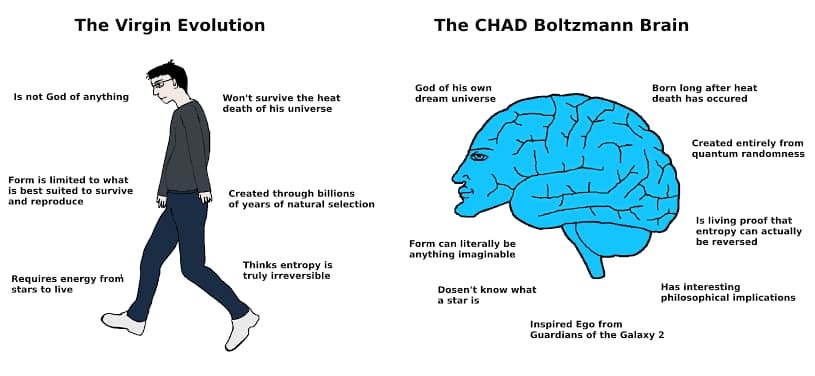
In the real world, the same can happen. I have two degrees in writing, and as much as I loved them, they did come with an atmosphere, a miasma.

There was a definite leaning toward the so-called ‘traditional’ - that is that traditional publishing (getting other people to do your covers and marketing and editing and printing for you) is supposed to be superior to anything else you can do. At my university, the general consensus among academics was that you had trad pub, and vanity pub. Self-pub in 2015 was seen as even lesser; it was for authors too broke to be financially abused by vanity presses, who sadly had to roam the world printing their own unwanted stories and begging people to read them rather than pissing their pensions away on someone called BOOK MAGIC LOVE MARKETING BOOK PUBLISH COMPANY LONDON AMAZON BOOK AMAZING DOT COM.
When we had visiting writers, they were always people who had been traditionally published. These therefore must have been the only people worth reading. There was an omission here, an abandonment, an ignorance of other methods of Being a Writer.
You were either trad, or you were not worth speaking to.
I never did believe this picture that was painted for me. Not least because I got talking to one professor who saw through the atmosphere, and who put me in touch with a fantastic self-published author. I did my final third year presentation on my belief that, by 2025 (so ten years hence), self-publishing technology, and therefore quality, would far exceed that of traditional publishing. I even included jokes about one book, because I had recently been told “You are a great comedian” by an acrobat at a poetry reading. This spun me into an existential dizziness, as I wondered, was it true? Could I be comedian, poet, author, all at once?
This plagued me until very recently, when I gave up on the categories.
I knew I was weird, and I wanted to make spaces for weird people. So I founded and I ran my own writing society and actually found visiting writers who were not traditional. One was self-pub, one was vanity pub (I am sorry friend, but you were, though I had not the heart to explain at the time).
Anyway. I did all of this, which built up to my final presentation. I said that THE MARTIAN was self-pub and was well-written, showing examples from the book. I then picked a trad-pub book that was terrible, and made a point that therefore all trad-pub books must be terrible.
As I hoped, someone pointed out this was cherry picking.
Onto the next slide.
I had another, horrible self-pub book, and a very good trad-pub book.
I made the point that the literature’s quality is not actually manipulated by the selection processes of trad-pub at all, that ‘bad’ stories sneak through and that since art is largely subjective anyway, perhaps the style of self-pub stories that is not wanted by trad-pub is not ‘bad’ but merely different, intended for audiences who don’t go into chain bookstores and don’t care what someone at The Guardian thinks about a book. They want a proper synopsis on the back, not a paid and gushing review. They go to ComicCon, they dress up in awesome Star Trek outfits, and they want action, adventure, and mystery.
And I want to provide that for them.
Sure, I was laughed at by less than a handful of classmates, but so what?
You see, if I wasn’t picked up by TOR or BAEN or someone else, my literature had to be shit. This was the idea, the atmosphere, pumped in subtly between writing modules. Because NAME OF BORING ANTHOLOGY OF BRITISH STORIES was tradpub, so it had to be good. We were shown these books and sometimes told, this is what publishers want.
But is it what audiences want?
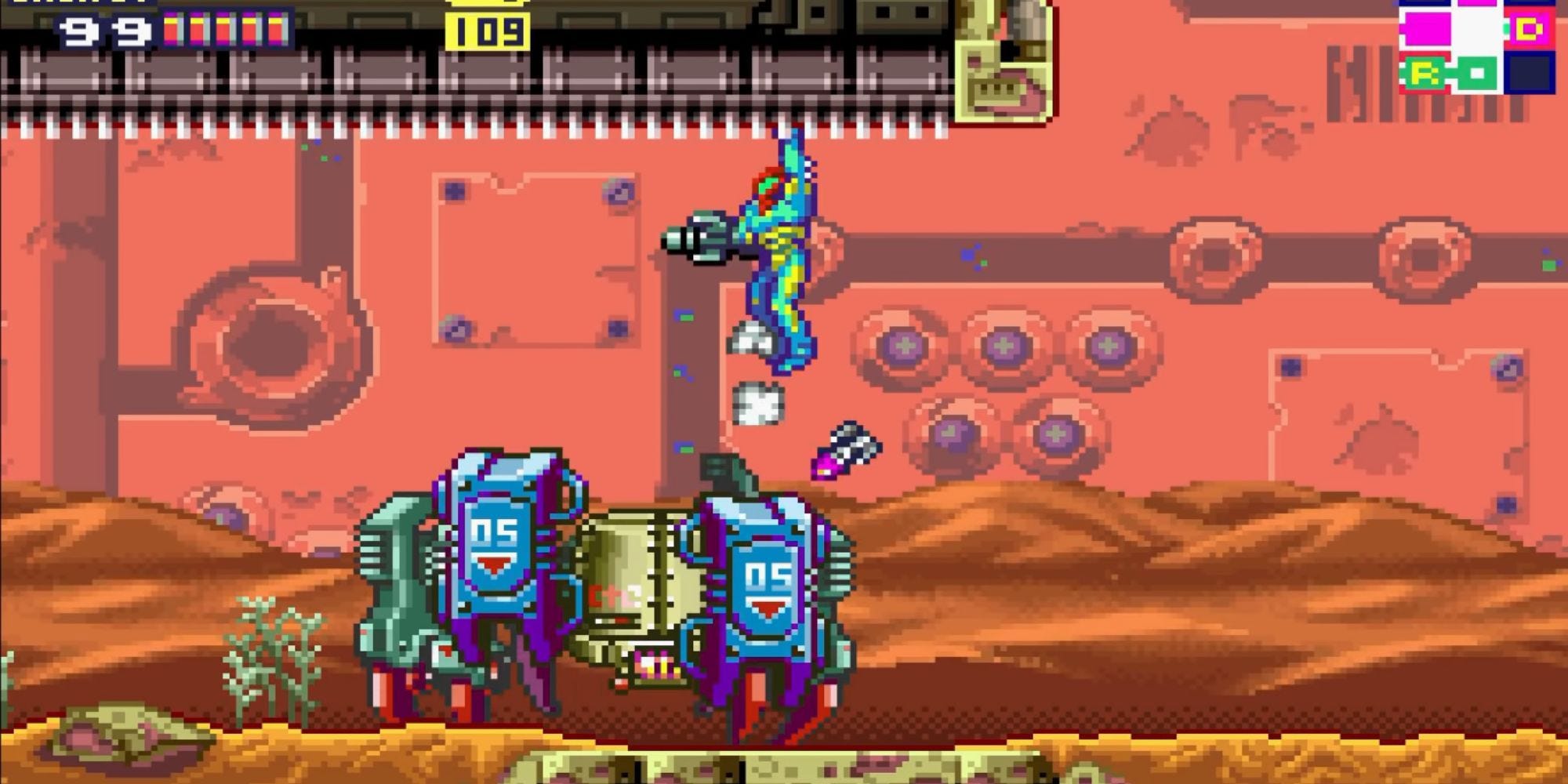
I didn’t like NAME OF BORING ANTHOLOGY OF BRITISH STORIES. The stories had predictable twists which were telegraphed to the reader on page one, like the final swinging battle moves of a rhythmic video game boss, but much less fun (below screenshot is Metroid Fusion, a fantastic game). If you actually read the things properly, the ending was apparent long before the fourteen-page rant about the writer’s messy divorce, as told through the medium of three drunk men at a pub.
One of the stories was about a woman who turns into a duck. In the first page she is seen ‘pecking’ at crisps, ‘plucking’ her feathered coat, and some other duck related things. She talks almost endlessly about the ducks outside.
I told my tutor when he asked the class ‘what do you think happens next?’ that she obviously turned into one of the ducks in the pub car park.
He said ‘you’ve read this already, then?’
‘No, it’s obvious’ I said.
I just recognise patterns.
And that’s what I realised was different about trad vs self pub.
It’s not merely stylistic, but structural. Science Fiction as a genre typically has a set up and release, a building and activating of a literary trap. And the building is subtle, clever. Other genres do this too, but the short form lit fic tends not to. Some of the stories in that anthology felt improvised, unedited. But how can this be? Is it merely style, or have stories, like modern poems, become emptier and emptier as time goes by? Has storytelling been replaced with ‘vibes’ (the new favourite word for booktok influencers owned by massive publishers). Is there a schism between us which runs deeper than the mere choosing of printing companies?
I think so.
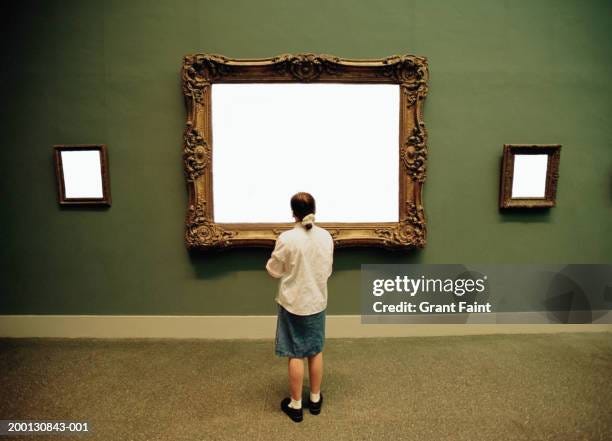
People will stare at a blank wall if you say it contains meaning.
“It symbolises the artist’s descent into mania after discovering her father never really liked the crayon drawings he put on the fridge in her youth,” said one person projecting their own insecurities onto what is, essentially (and literally) a blank canvas.
There’s a balance to be had here. I know I am being opinionated. I hope it makes this post more interesting. There are meta-styles evolving in the two spaces. Tradpubs know what they like, and they want more of that. Selfpub authors know what their audiences like, and they write more of that. Both spaces are encouraged to chase trends, but in both the best books clearly do not care for trends.
You don’t want to hold your reader’s hands and bore them witless and shitless with exposition dumps about your Sci-Fi universe’s in-universe political struggles, nor do you want to kick them into outer space and not populate that space with anything, unless of course your story is a Boltzmann Brain story.
Callbacks. Those too are missing in some stories.
I think one tradpub book which balances this very well is Amelie Nothomb’s The Character of Rain, which as I recall (see, I enjoyed some books at uni) spends a long time talking about tubes, but makes it a little bit different each time. It’s a neat little novella which does not abandon you and does not hold your hand. It is interesting. I liked it, and it is very far removed from what I would typically buy. It’s more of a big poem than a story.
Some tradpub books are fantastic, as are some selfpub books.
The point being, it should be a case-by-case decision for authors.
For me, self publishing WHO BUILT THE HUMANS was necessary and smart. It is a Sci-Fi Comedy which sometimes bursts into lyric about alien abductions and simulation theory between jokes about evolution. It would be a nightmare to find an agent for that. I’d still be looking today.
Instead, I published it in 2020.
Many of my author friends are tradpub, and I do not envy the massive effort they put into it. Perhaps I am something of a goblin, a mad scientist, as I cannot hold still for long enough to write a query.
Again, it’s up to you what works.
I worked with an author some years later whose manuscript felt improvised, like those very popular short stories. She had two boys find a pub in a forest, lights on at night, and the pub is only mentioned when they are at its door. Surely they’d have seen it beforehand? She took a while to see what I was meaning, that the light through the forest would not merely be good foreshadowing, but that it was also PHYSICALLY REAL to the story world. It made LESS sense to have the pub manifest. She revealed she had sent me a first draft, so the pub was literally new to the story universe.
So, how come I can find empty story universes and empty characters in bestselling, coffee shop sponsored, daytime TV sponsored, Newspaper sponsored, podcast sponsored, weight loss pill sponsored, erection pill sponsored, spa holiday sponsored, books? Is tradpub really the big golden sticker of literary approval that people treat it as, or is it simply another path you can take as a writer?
I wonder sometimes if too many cooks spoil the broth. I think this happened with Dr Who, which had no internal consistency, which led less and less people to care about things because things were always undone (the writing it seems was akin to improvised dance, moving between ‘cool’ action shots without rhyme or meaning. The time eating bats never showed up again because writers could not be bothered and wanted to leave their own mark, despite engineering situations where paradox eating bats absolutely would show up to gnaw on the big delicious paradoxes).
And I think it happens to books, too.
There’s too much red tape in tradpub sometimes (for me, anyway, I know some people like it, and that’s okay).
I met a grumpy, miserable writer the other week who bemoaned their literary agent for doing a deal with them to remove a character’s pet from the manuscript in favour of going with a slight cover revision to a cover the author hated a little bit less than the last one.
So, kill off a neat side character and we’ll make your name look a bit nicer, but you still won’t like the cover and won’t smile when posing beside the book.
Sounds like a bad deal to me.
I don’t want to deal with that. I do my own covers unless I have a vision I cannot attain, in which case I draft concept art, and get an actual artist to do something based off it (this is how MACABRE MULTIVERSE’s cover happened).
I keep and cut whatever characters I like.
And your opinion, as the reader, is a lot more important than mine.
And that’s how it should be.
Readers > Authors > Publishers
Anyway, I’ve gotten carried away.
Despite being laughed at for my opinion that selfpub would one day grow capable of doing what tradpub did, I was proven right in the end. In 2023 I was peddling copies of WHO BUILT THE HUMANS? in Gorton Cathedral, Manchester (thanks to my pal Ruth of allFM fame, for pointing this gig out to me).
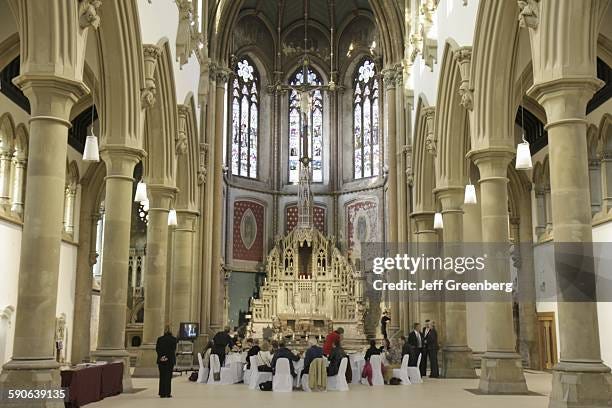
I sold a handful, and near the end of the day met an older gentleman who seemed very intrigued.
“Ah, a proper synopsis at the back. Nobody does those now.”
“I agree,” I said. “We need to bring those back.”
“Too many reviews from newspapers. No room. But readers want to know what the book is about.”
“Yeah,” I said, trying to figure him out.
“Halfplanet Press. Not heard from them. Are they an offshoot?”
“Of who?”
“Can’t tell yet. But the cover is good. And the formatting is easy on the eye.”
“Thank you.”
“Is it a small team?”
“Very small team,” I said, trying not to smirk. I later revealed that the entire Halfplanet Press team was me in various guises, sometimes emailing bits to myself. He was impressed, wished me luck, and revealed he was a veteran of one of the BIG FIVE publishers. I told him the book was self-published, and he smiled and said it was amazing.
2015 Phillip was right. Self-publishing caught up, and in many cases, outran trad pub. Because we get to keep the best bits, and invent new ones.
A few years back, I was briefly querying THE STEPHANIE GLITCH and even had an agent interested in it, but we lost touch after I started posting stand-up clips on social media, and I sometimes wonder, did I need to keep playing the character of a clever author, did the rude time travel jokes put them off? Is that why they unfollowed me, thus closing their message inbox forever?
I don’t like the anxiety that trad pub can bring.
Like a 9-5 in an office, it does not suit me.
But it might suit you.
So do what suits you.
On the other end of the storytelling spectrum, I do a lot of Minecraft Streams now. I tell jokes (improv usually) and chat with people and show them how to build stuff. It is quickly becoming my day job. I love it. It’s a new way to tell stories, and I sometimes sell books from it when people look me up online and notice I am also in Barnes and Noble.
What I am saying is, writers, readers, do what works for you and do it relentlessly.
I am continually evolving, and that’s what I love about being self-pub.
For now, self-publishing works for me. But I’ve had some stories picked up by small presses, too. Am I hybrid? No idea.
So, my point all this time has been, the decision should be book-by-book.
Do what works for you, for your story, and that is how it becomes the best story it could be. Don’t fret too much about which mode is ‘superior’ and consider instead which mode suits your story.
For me, WBTH had the freedom to be weird, because I stepped away from my training and explored this weird new world called self-publishing.
I can do what I want, what readers want, and nobody stops me.
Thanks to you, I feel like I have already ‘made it’ as an author.

If anyone wants to see my newest Minecraft video.
https://www.youtube.com/watch?v=FFjOE56SDcw