Today, this poem is eleven years old. It remains one of my favourites, and is from my university era. It was one of those poems that contained within it something that I once feared I left behind in the English Corridor, but have since rediscovered in my brain.
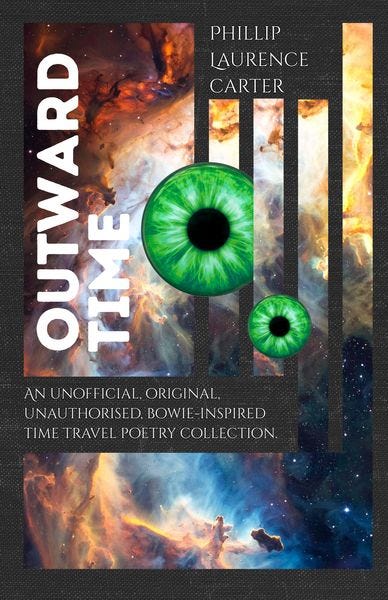
I share it today because that book is taking shape again. I am tempted to simultaneously release it alongside WHO KILLED THE HUMANS?, my upcoming Sci-Fi Comedy book. Anyone I know who is into marketing has told me not to do this. That makes it sound more fun, more exciting. Imagine a Sci-Fi comedian finishing a book launch, donning a hat and a fake moustache, and then immediately launching another book.
Seems like a great idea to me.
Rising Moss
23 April 2015
she kept his words in rock pools by the back door
let them grow stagnant
discarded beside empty bottles
cigarette packs
recollections unvisited

over time a fine green velvet grew from the words
binding whatever had not evaporated over summer
into something reminiscent of memory
little mosaics of life
yet still they waited outside

her reconstituted external memories, abandoned
she never knew
that their slow growth on a bottle of cider
left there one summer
could prompt the resurgence of inherent behaviours
buried under the bracken of her present

the bottles were never given time to grow cold
the corpses of lovers never left alone
slid in and out the drawer like birthday cards on rainy days
on that final night, when the moss crept up into her room
nostalgia kept the sun from setting
Author’s notes:
You can smell the Bowie influence in this one. It’s very GLASS SPIDER.
This poem was written for my third year poetry collection, and happens in an almost Fantasy world where every single suburban thing is alien in some way. The moss is sentient, and there are space spiders hiding in church bells. For that reason it is very much not fashionable poetry (what is fashionable is poetry about breakups, which you could argue this is, but it is still Wyrd).
I wrote the entire poem in eight minutes, which I only remember as it was for a writing exercise, after which we read them to the class, and the visiting writer told me in front of forty people he did not believe I had written it in that time. This pissed me off. Luckily, one of my tutors said something like, “That’s Phillip, he writes fast.” and I didn’t need to reply myself.
A few years later I went to a small political bookshop and found the visiting writer’s poetry book gathering dust under some love story about Jeremy Corbyn. It had waited there for eight years unsold. My poetry book, on the other hand, had sold every copy that was printed, because I had not yet printed it. Technically, I was doing better.
(don’t think about that too much, it will fall apart).
More poems?
This poem was written a few months before David Bowie’s death in 2016, an event which marked a personal change in my own life because I realised just how much his writing meant to me. Another professor remarked he was “just a rock star” and later apologised to me at a writing event, but I didn’t let it go. Not for personal, emotional reasons, but because I thought it was accidentally pretty poignant. The comment was meant as a lazy jibe, but it showed that only one Face of Bowie appeared to the person. Bowie was multifaceted, perhaps the only role model I had besides Gary Numan (who fills his lyrics with Sci-Fi stories) who showed me that I could carve out a successful life as an artist whilst doing multiple things.
I have written a small poetry book lately, without much fanfare. It’s essentially a fan project, based on Bowie. You can get it right now with the link below.